Jacksonville, FL guide
Pool heat pumps in Jacksonville: how they work and how to size one
How a pool heat pump stretches the swimming season, what decides the right size, where it works best and where gas or solar makes more sense.
By Glenn Milburn, HVAC Guides Editor Updated September 2026
Quick answer
Do pool heat pumps work well in Jacksonville, FL?
Pool heat pumps work well in Jacksonville for most of the year because they pull heat from warm outdoor air, which is plentiful from spring through fall. They become less effective as air temperatures fall into the 40s and 50s, so they extend the swimming season well but heat slowly on the coldest winter days. A pool cover makes a large difference.
An air conditioner in reverse
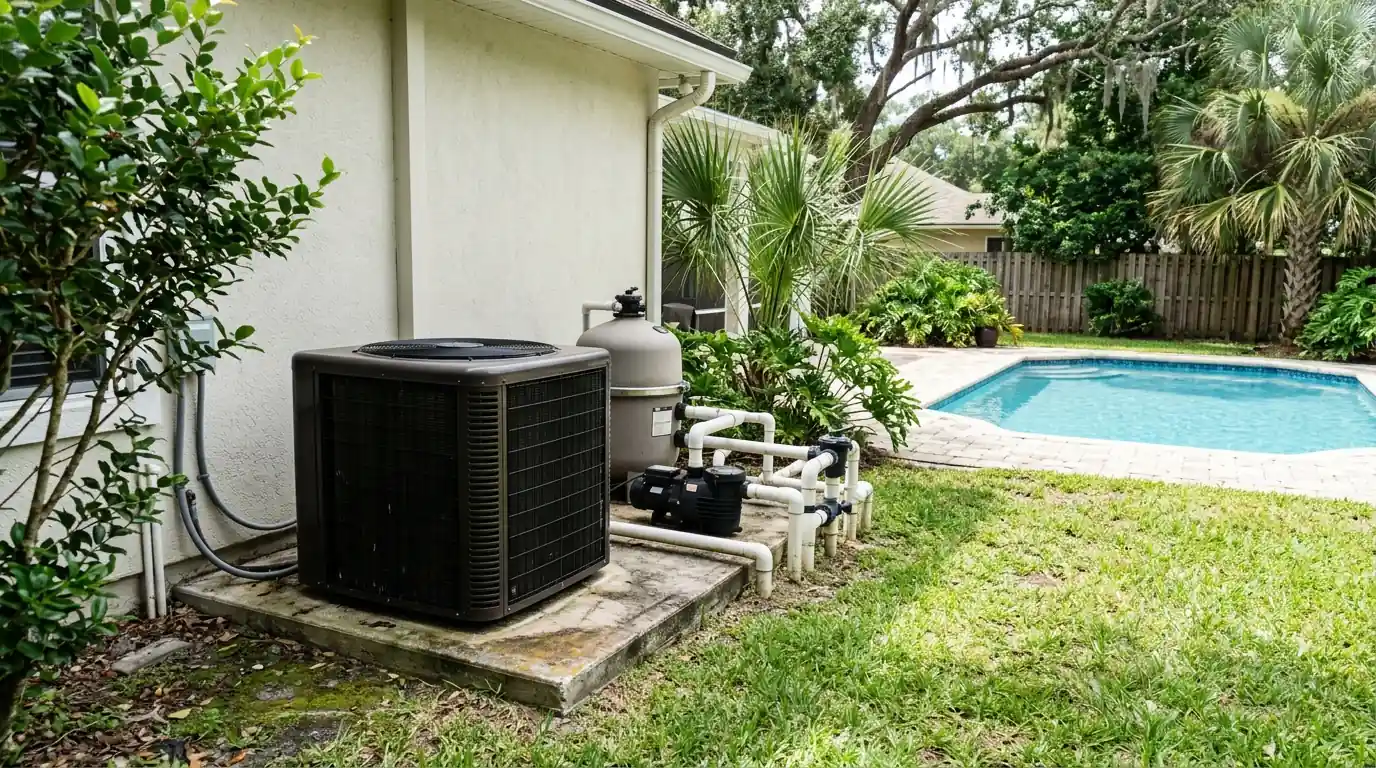
A pool heat pump works like an air conditioner running backward. A fan pulls outdoor air across a coil, refrigerant absorbs heat from that air, a compressor concentrates it, and a heat exchanger transfers it into the pool water as it flows through. Because it moves heat rather than making it, a heat pump delivers several units of heat for every unit of electricity it uses, as long as the air has heat to give.
That's why heat pumps suit Northeast Florida. For most of the year the air is warm and humid, which is exactly what a heat pump wants, and the pool can be kept comfortable for far longer than the summer months alone.
Where they shine and where they struggle
From spring through fall, a heat pump keeps a pool warm efficiently and holds temperature overnight, especially with a cover. As air temperatures drop into the 50s and 40s on winter days, output falls, the unit runs longer and it can struggle to raise the water temperature quickly. Most units also have a low-temperature cutoff below which they stop to protect themselves.
So a heat pump is a season extender, not an instant heater. If you want to heat a cold pool quickly for a weekend in January, or you heat a spa that you want hot within the hour, a gas heater does that better. Many owners use a heat pump for the pool and keep gas for a spa.
Sizing a pool heat pump
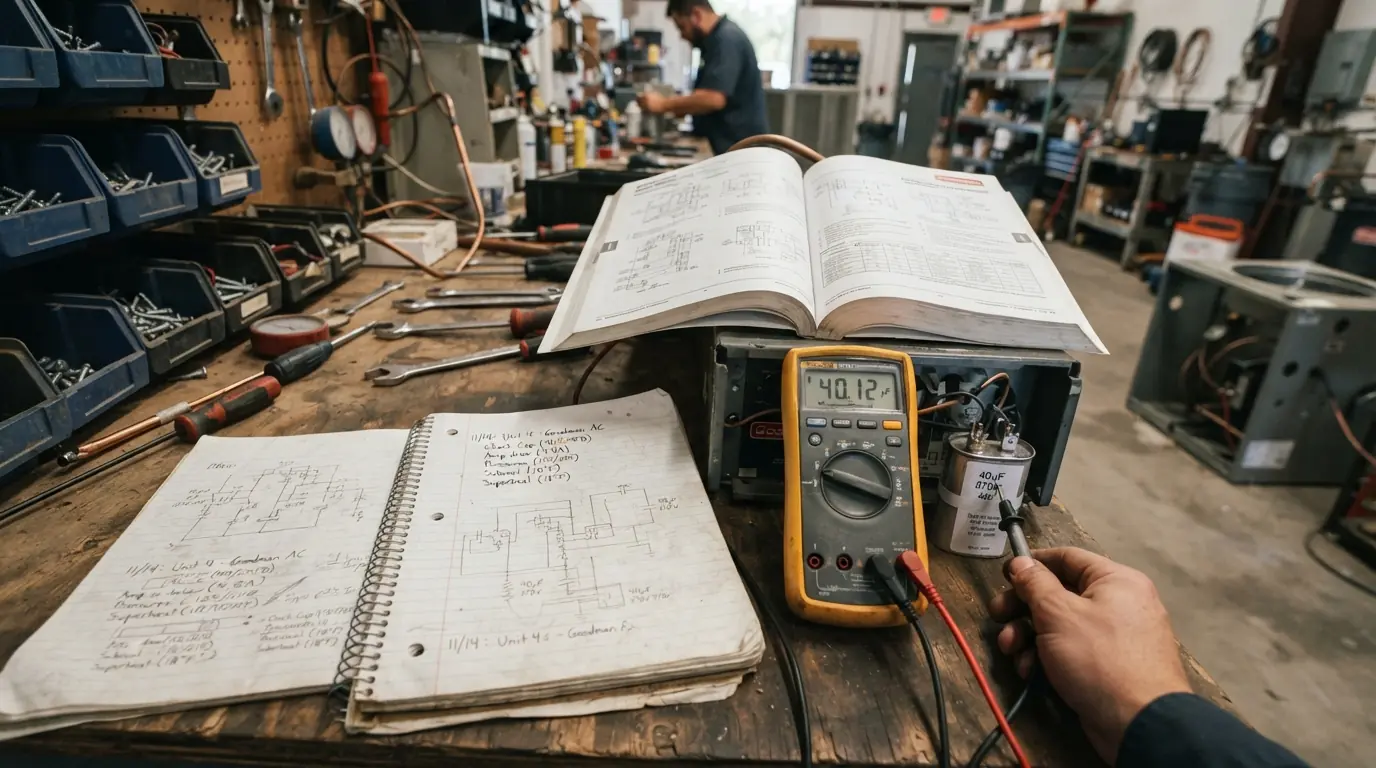
Size depends on the pool's surface area, how many degrees above air temperature you want the water, how exposed the pool is to wind and whether you use a cover. Surface area matters more than gallons, because most heat is lost from the surface through evaporation. A screened enclosure cuts wind and helps; an open pool in a breezy yard needs more capacity.
Undersizing is the common mistake. A unit that's too small runs constantly and never reaches the target when it cools off. A properly sized unit reaches temperature and then cycles, which is easier on the equipment and the electric bill.
Thinking about a pool heat pump?
Call any hour. We'll look at the pool, the yard and the electrical and size it properly.
The cover makes the biggest difference
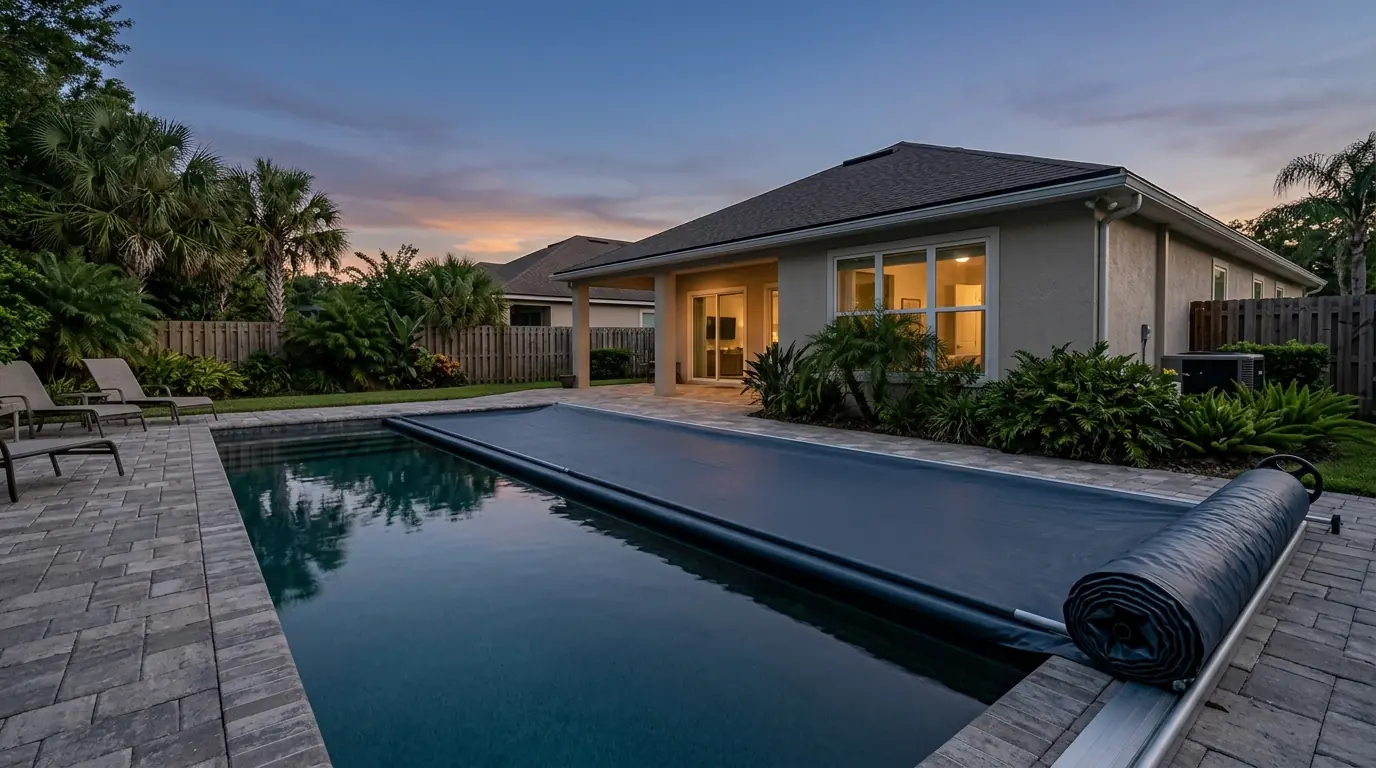
Evaporation from the surface is the largest source of heat loss from a pool, and a cover stops most of it. A heated pool without a cover can lose much of the day's heating overnight; with a cover, it holds far more of it. Solid covers, solar blankets and liquid covers all help, with solid and solar covers doing the most.
If you're planning a heat pump, plan a cover with it. It lets you buy a smaller unit, run it less and keep the water warmer through the shoulder seasons.
Placement and electrical
Heat pumps need open air around them to work, so they shouldn't be boxed in by fences, shrubs or walls, and the discharge should blow away from windows and patios. They sit on the equipment pad, plumbed after the filter, with a bypass so the flow is right. They also need a dedicated electrical circuit sized for the unit.
Near the coast, salt air works on the heat pump's coil just as it does on an air conditioner's, so a model with a corrosion-resistant coil or a coating is worth considering. Keeping the coil clear of leaves and debris protects efficiency everywhere.
Heat pump, gas or solar
Heat pumps cost more to buy than gas heaters but far less to run, and they need no gas line or venting. Gas heaters heat fast regardless of air temperature but cost more per hour to run. Solar collectors cost little to operate but depend on roof space and sunshine and heat least when you need it most in winter.
For a pool used through spring, summer and fall in Jacksonville, a heat pump is usually the best balance. For fast spa heating or serious winter swimming, a gas heater alongside it or instead of it may make sense.
Keeping it running
Pool heat pumps need regular attention: keep the coil clean, check water flow and the filter, keep water chemistry in range to protect the heat exchanger, and have the refrigeration side checked if heating output drops. Flow errors are among the most common faults and often trace back to a dirty filter or a valve position.
FAQ
Questions readers ask
How cold is too cold for a pool heat pump?
Output drops as air falls into the 50s and 40s, and most units stop below a set low-temperature cutoff.
How long does a pool heat pump take to heat a pool?
It depends on size, air temperature and cover use; it's a steady heater, not a quick one.
Is a pool heat pump cheaper to run than a gas heater?
Usually yes, because it moves heat from the air instead of burning fuel.
Do I need a pool cover with a heat pump?
It's strongly recommended, because evaporation from the surface is the biggest heat loss.
Where should a pool heat pump be installed?
On the equipment pad with open air around it, plumbed after the filter on a dedicated circuit.
Can one heat pump heat both a pool and a spa?
It can, but slowly; many owners add a gas heater for quick spa heating.
Can a pool heat pump run on a variable speed pool pump?
Yes, as long as the pump runs fast enough while heating to meet the heat pump's minimum flow; the speed is set during setup.
Keep reading
Related services and guides
Pool Heat Pump Installation
Pool heat pumps sized to the pool, the yard and the cover you'll use.
Learn moreSalt air and your AC
How salt damages outdoor coils, why coastal coils are hard to repair, and the maintenance and equipment choices that.
Learn moreHeat pump or AC with heat strips
How each system heats, why the climate here favors one of them, and the cases where the simpler option still makes.
Learn moreQuestions to ask an HVAC contractor
Ten questions that reveal how a contractor sizes, installs and stands behind a system, and what good answers sound.
Learn moreSize the heat pump to the pool
Call any hour to book a visit and get a written recommendation.