Jacksonville, FL
Ductwork replacement for Jacksonville homes
Full or partial duct system replacement, designed for the airflow your system actually needs, sealed with mastic and tested for leakage.
Quick answer
When should ductwork be replaced in a Jacksonville home?
Ductwork in a Jacksonville home should be replaced when flex duct is brittle, torn or crushed across many runs, when growth has spread inside it, or when the system is undersized for a new AC. Replacement with a designed, sealed and tested system often does more for comfort than a new outdoor unit alone.
Overview
Ducts deliver the air your AC makes
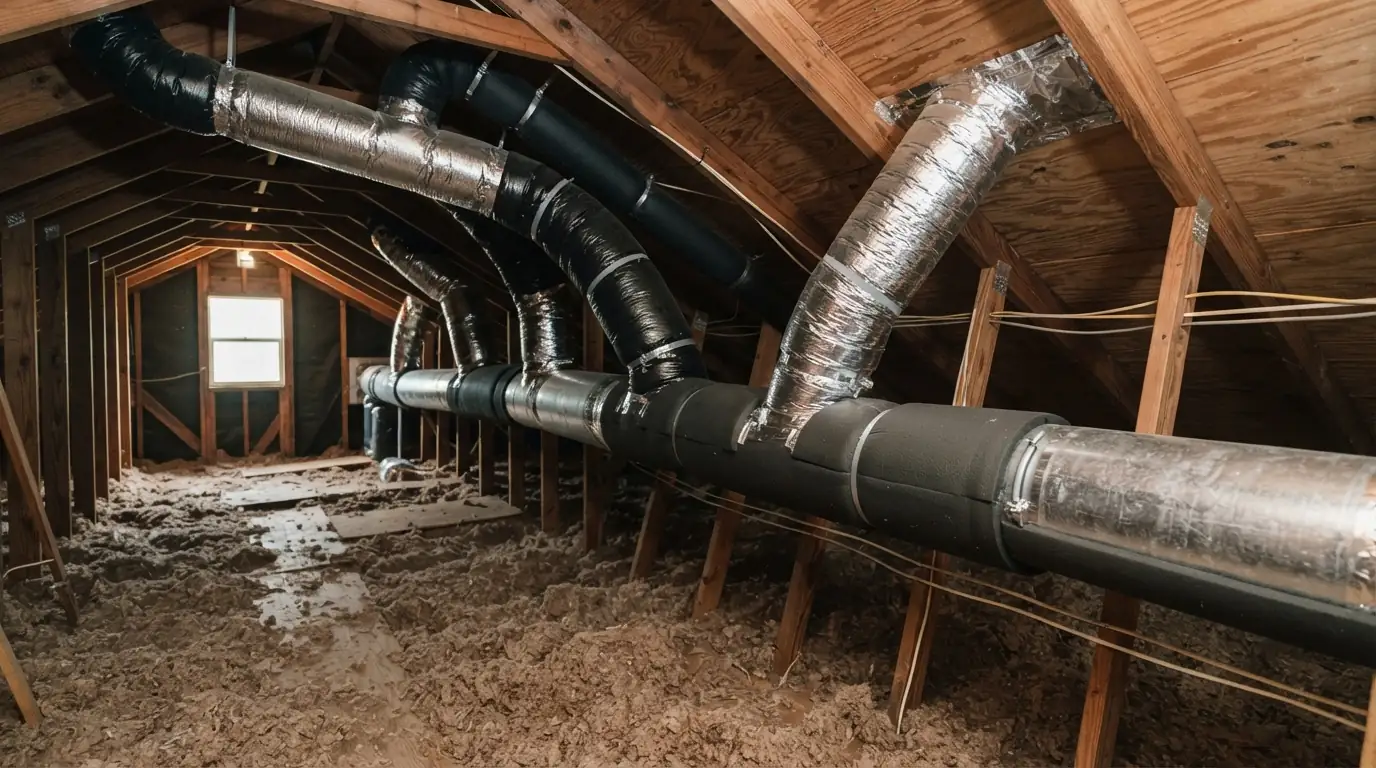
A new air conditioner on old, leaky or undersized ducts never performs the way it's rated. Flex duct in a hot attic ages, the jacket cracks, the liner tears, and runs sag and kink. At some point repairing individual runs stops making sense and a new, designed system does.
We design the replacement from the airflow each room needs, based on a load calculation, then size trunks and branches to deliver it without excessive static pressure. Everything is strapped, supported, sealed with mastic and tested for leakage before we're done. Often this is done alongside a system replacement so the new equipment gets ducts that match it.
Cost factors
What affects the cost of duct replacement
- Size of the systemNumber of runs and square footage served.
- MaterialsFlex duct, duct board or sheet metal trunks.
- ReturnsAdding return capacity adds runs and grilles.
- Attic accessLow clearance and deep insulation slow the work.
- RemovalOld ducts removed and disposed of.
We design the new system and price it in writing, often alongside an equipment replacement.
Options
Repair, seal or replace
| Option | When it fits | Result |
|---|---|---|
| Spot repair | One or two failed runs | Fixes the problem rooms |
| Sealing | Sound ducts with leaky joints | Less leakage, same layout |
| Partial replacement | Several failing runs | New runs where needed |
| Full replacement | Brittle, torn or undersized system | Designed, sealed, tested system |
| Replacement + new equipment | Old ducts and old system | Ducts matched to the new system |
A leakage test and inspection tell us which option makes sense.
What is included
Every duct replacement includes
- Load calculation and room-by-room airflow design
- Old ducts removed
- New plenums sealed to the air handler
- Trunks and branches sized to design
- Flex duct strapped and supported
- Every joint sealed with mastic
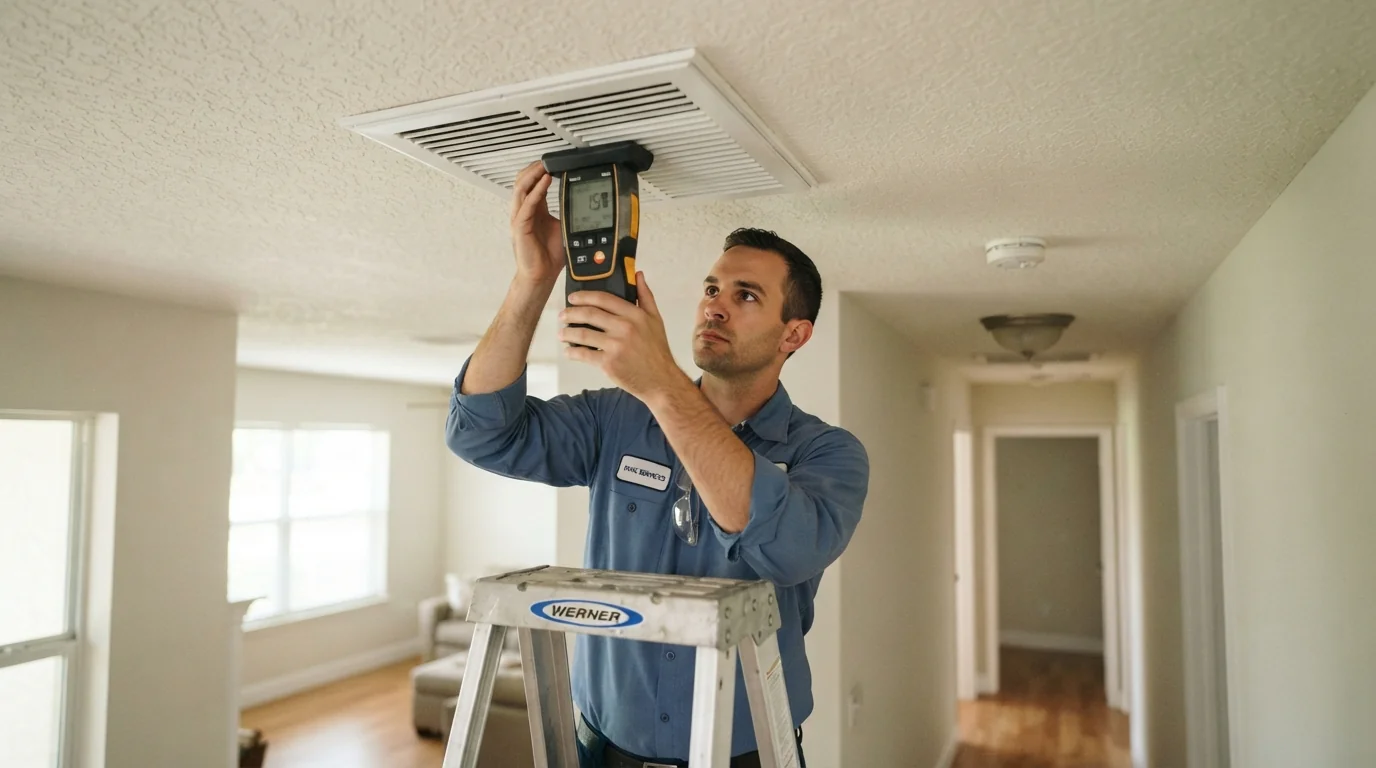
- Leakage test after installation
- Airflow checked at registers
What we fix
Full attic duct system
A full replacement removes the old ducts and installs a new system designed for the house: supply plenum, trunks, branches, boots and registers, plus the return. We size each run to the room it serves so the far bedrooms get their share, keep runs as short and straight as the attic allows, and support flex duct properly so it won't sag. The new system is sealed with mastic and leakage-tested before the insulation is put back. You get the leakage test result in writing.
Return air upgrade
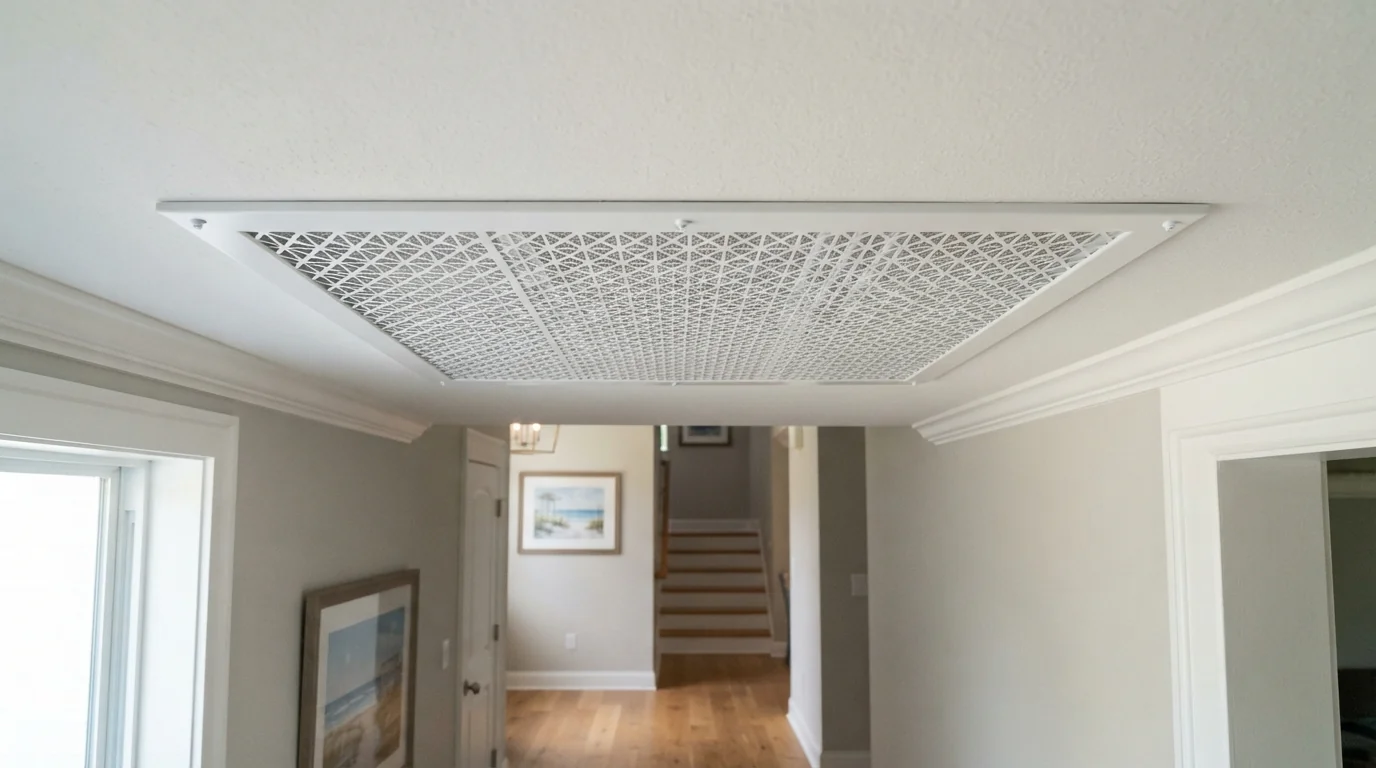
Many homes have a single, undersized return in a hallway, which chokes airflow and makes the system noisy and less efficient. Adding return capacity, or returns in bedrooms that close off from the hallway, balances the airflow and lowers static pressure. It's one of the most effective upgrades for a home where rooms feel stuffy with the doors shut, and it's often included when ducts are replaced. Rooms often feel noticeably less stuffy once the return path is right, and the system usually runs quieter because the blower isn't straining against a choked return.
Sealed plenums
The supply and return plenums connect the ducts to the air handler, and their joints are among the leakiest points in most systems. On a replacement we build or refit the plenums, seal every seam with mastic, and connect them tightly to the air handler. A leaking return plenum in a hot attic or garage pulls in hot, humid air, so sealing it properly pays off in both comfort and humidity. It's unglamorous work, but it's where a lot of wasted cooling hides.
Why duct design matters here
In Jacksonville's humid climate, correct sizing matters for both the equipment and the ducts. A system that's sized properly but connected to undersized or leaky ducts still short-cycles, struggles to move enough air across the coil and leaves the house damp. When we replace ducts, the design comes from the same load calculation as the equipment, so airflow and capacity match instead of fighting each other.
How the job runs
How a duct replacement runs
- 1
Inspect and measure
Existing ducts, returns and load assessed.
- 2
Design and quote
New layout and materials in writing.
- 3
Remove
Old ducts taken out.
- 4
Install and seal
New system installed, strapped and sealed.
- 5
Test
Leakage and airflow measured.
FAQ
Duct replacement questions
How long do ducts last?
It varies; flex duct in hot attics often shows its age sooner than people expect.
Should I replace ducts with a new AC?
If they're old, leaky or undersized, it's the best time to do it.
How long does duct replacement take?
Most homes take one to two days.
Will new ducts help one hot room?
A designed system sizes each run to its room, which usually fixes it.
Do you test the new ducts?
Yes, leakage and register airflow are measured.
Is sheet metal better than flex?
Metal trunks with well-installed flex branches are a common, durable combination.
Is it messy inside the house?
Most work is in the attic; registers are replaced from below.
Related services
Other work on the same system
Duct Cleaning
Dust, debris and growth cleared from supply and return runs after renovations or water events.
Learn moreSmart Thermostat Installation
Wi-Fi and humidity-control thermostats wired correctly for heat pumps and staging.
Learn moreGive the system ducts that fit it
Call any hour to book a duct inspection and design.