Jacksonville, FL guide
Salt air and your AC: a guide for coastal Jacksonville homes
How salt damages outdoor coils, why coastal coils are hard to repair, and the maintenance and equipment choices that buy real years.
By Glenn Milburn, HVAC Guides Editor Updated September 2026
Quick answer
How does salt air affect air conditioners near Jacksonville's beaches?
Near Jacksonville Beach, Atlantic Beach and Ponte Vedra, salt settles on outdoor AC coils, holds moisture and corrodes the aluminum far faster than inland, which leads to refrigerant leaks and early coil or system replacement. Annual or twice-yearly coil cleaning, coated coastal grade equipment and sheltered condenser placement slow it down.
What salt does to a coil
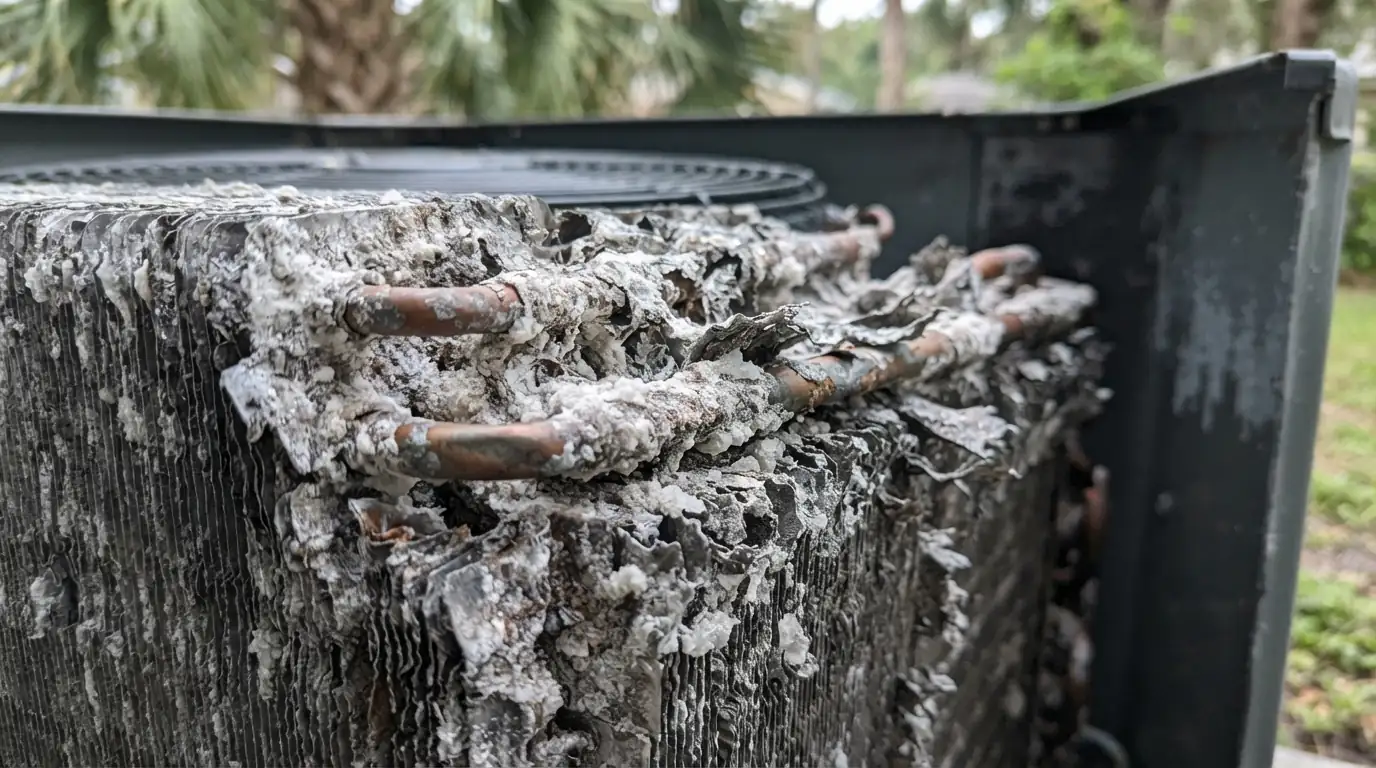
The outdoor coil is made of thin aluminum fins wrapped around copper or aluminum tubes. Salt carried on the ocean breeze settles on those fins, and because salt attracts moisture, the coil stays damp. In Northeast Florida's year-round humidity, that combination corrodes metal quickly.
The damage builds quietly. Fins pit and flake, airflow through the coil drops, efficiency falls, and eventually pinhole leaks open in the tubes. By the time the system is low on refrigerant, the coil is often far gone.
Why coastal coils are hard to repair
Inland, a single refrigerant leak can often be found and patched. On a salt-corroded coil the metal around the leak is already weakened, so a patch rarely holds, and new leaks tend to appear nearby. That's why coastal leak calls often end in a coil replacement or a new condenser.
Knowing that changes how you think about a repair. Putting a new fan motor or capacitor on a unit whose coil is badly corroded may not be money well spent.
Warning signs to watch
Look at the outdoor coil. White crust, flaking fins or fins that crumble when brushed are signs of corrosion. Rust on the cabinet, screws and electrical panel is another. Inside, you may notice weaker cooling, longer run times or ice on the lines as refrigerant leaks out.
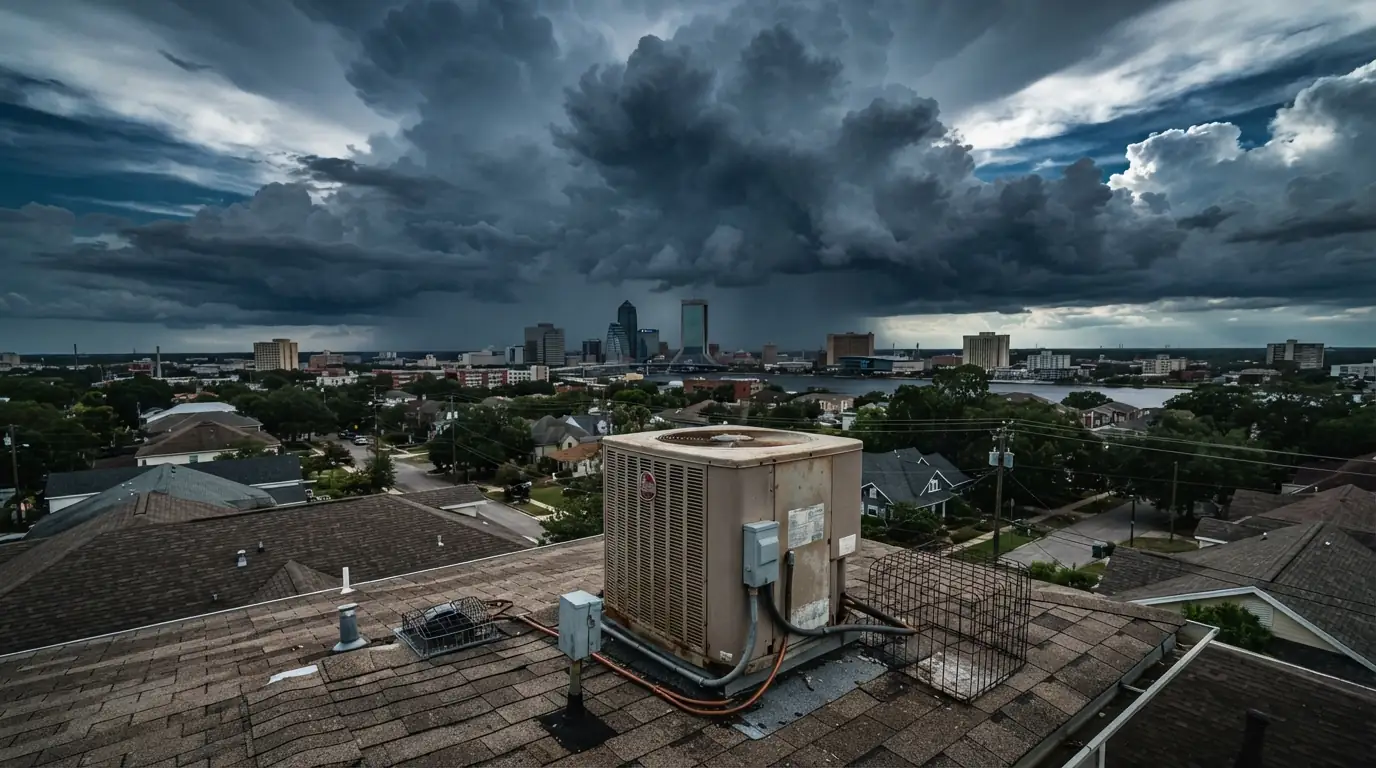
The closer the house is to the ocean, the faster it happens. Homes right on the water see it within a few years; homes a few miles inland see it more slowly.
Live near the water?
Call any hour. We'll inspect the coil and tell you honestly how much life it has left.
Maintenance that makes a difference
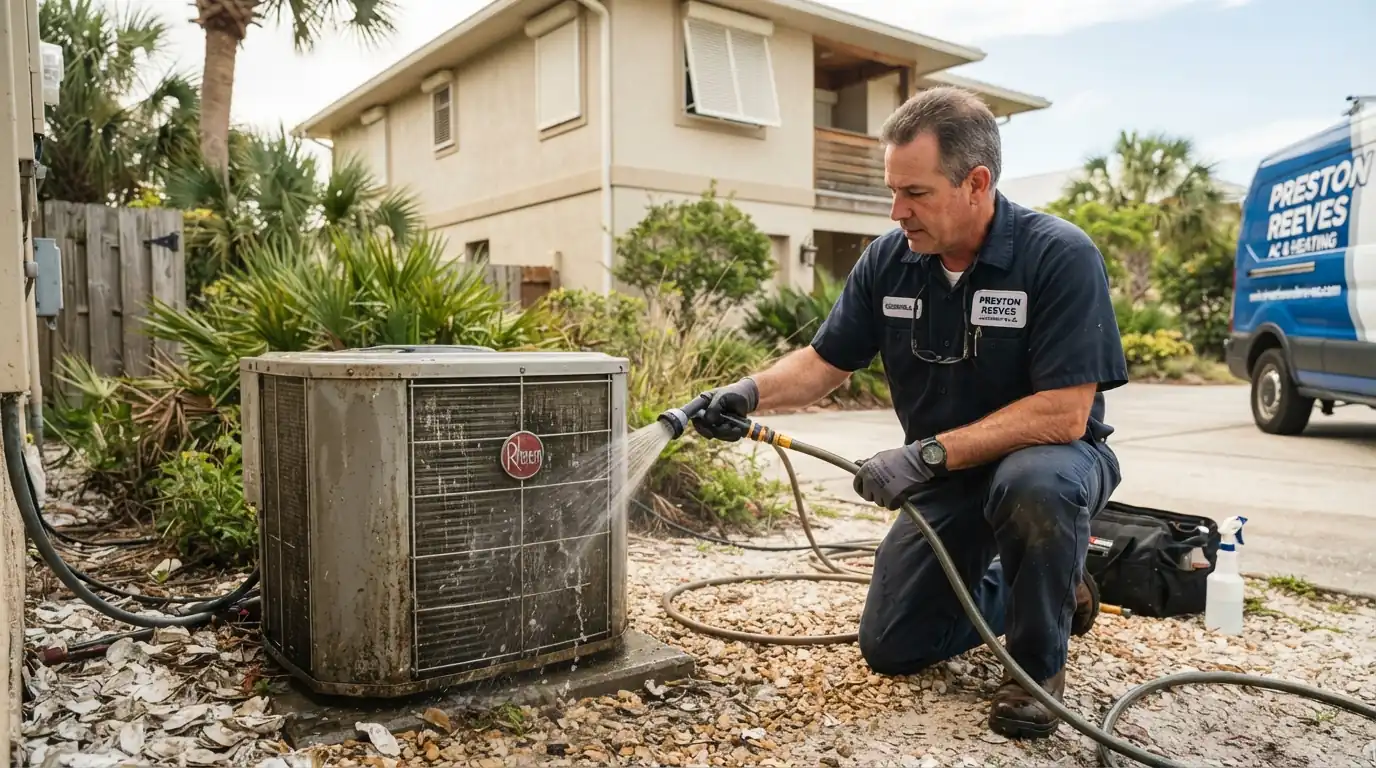
Regular coil cleaning is the single most useful habit. For homes within a few miles of the ocean, cleaning at least annually and often twice a year removes salt before it does lasting damage. Between visits, a gentle freshwater rinse of the outdoor coil, especially after a storm, helps too. Avoid high pressure, which bends fins.
Keep plants and fences a couple of feet back from the unit so air can move freely and salty moisture doesn't linger around it.
It's not only the coil
Salt also works on the cabinet, the fan motor, the electrical connections and the capacitor. Corroded terminals can cause intermittent failures that are hard to pin down, and a rusted cabinet lets more moisture reach the parts inside. A coastal tune up should look at all of it, not just rinse the coil.
Screws and fasteners on older units often rust solid. Replacing them with stainless hardware during service is a small job that makes future repairs easier.
After a storm
Tropical storms and strong onshore winds drive a heavy load of salt spray inland. Once it's safe, rinse the outdoor coil gently with fresh water, check that nothing is blocking the unit, and look for debris lodged in the fan guard. If the unit was submerged or took a direct hit, have it inspected before running it.
Budgeting for a coastal system
A system right on the coast simply doesn't last as long as the same unit ten miles inland, and it helps to plan for that. Regular coil cleaning and a coated coastal unit stretch the life considerably, but it's sensible to expect earlier coil trouble than an inland neighbor and to set money aside accordingly.
When a coastal unit starts leaking, compare the cost of a coil replacement against a new coastal grade condenser. On an older system the new condenser is often the better value, since a new coil on a corroded cabinet leaves the rest of the unit exposed.
Equipment and placement choices
When it's time to replace, coastal grade condensers with coated coils and stainless hardware add roughly $500 to $1,000 to the outdoor unit and usually pay for themselves in coil life. Protective coatings can also be applied to some units.
Placement matters. A condenser on the side of the house sheltered from the prevailing ocean wind collects less salt spray. On a replacement we look at moving the unit if a better spot is available.
FAQ
Questions readers ask
How often should a coastal AC be serviced?
At least once a year, and often twice for homes within a few miles of the ocean.
Can I rinse my condenser myself?
Yes, with a gentle freshwater rinse. Avoid pressure washers.
Is coastal grade equipment worth it?
Near the beach, usually yes. It adds about $500 to $1,000 and protects the coil.
Why do coastal coils leak?
Salt corrodes the aluminum until pinholes open in the tubes.
Can a corroded coil be patched?
Rarely for long. The surrounding metal is already weak.
Does placement really matter?
Yes. Shielding the unit from ocean wind reduces salt buildup.
Do coil coatings last forever?
No. They slow corrosion significantly but still benefit from regular cleaning and inspection.
Keep reading
Related services and guides
Repair or replace your AC
The five factors that actually decide it, the repairs that are almost always worth doing, and the situations where.
Learn moreWhat an AC replacement costs
Published price ranges for the city, the five things that move a quote up or down, and the rebate and tax-credit facts.
Learn moreHurricane season and your AC
What to do before a storm, why you should shut the system off, and the checks to make before turning it back on after.
Learn moreProtect the coil before it leaks
Call any hour to book a coastal inspection and tune up.