Jacksonville, FL
Air duct cleaning for Jacksonville homes
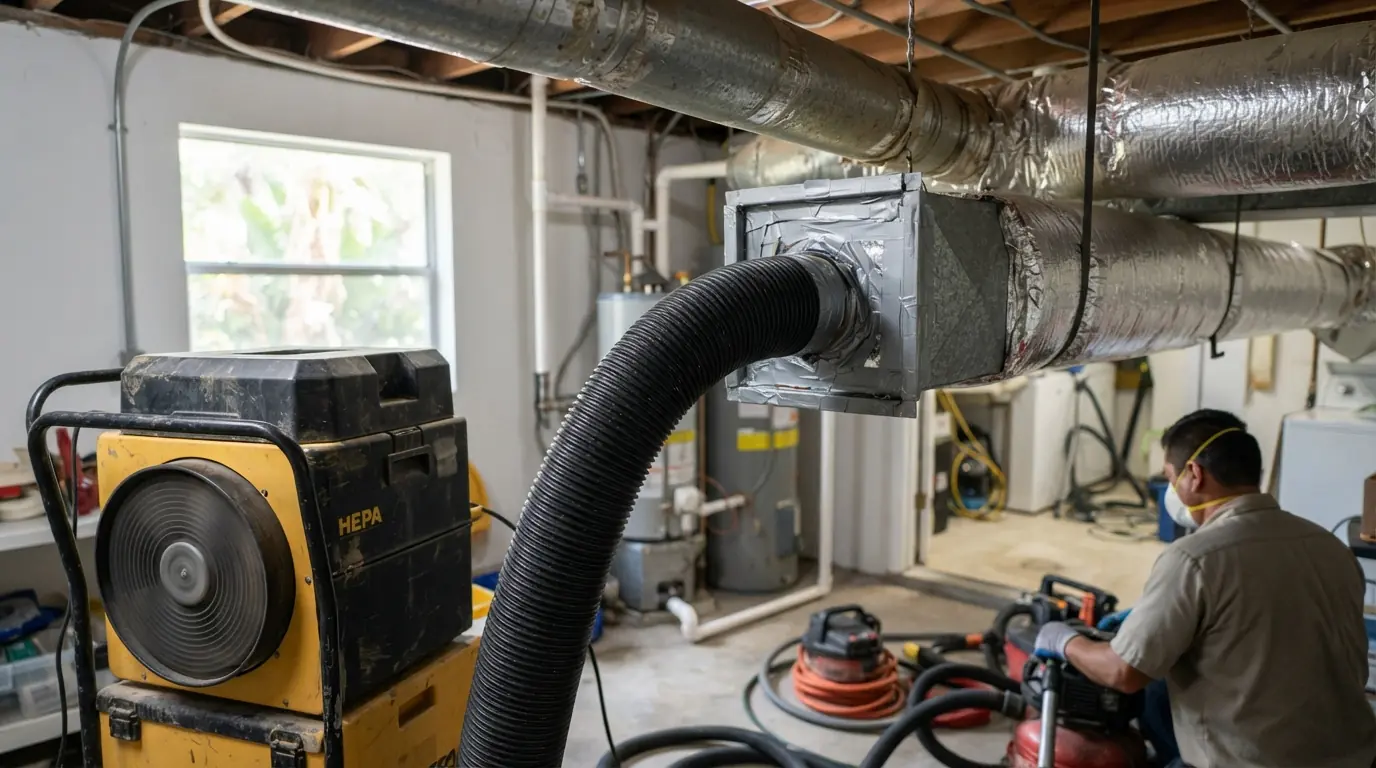
Supply and return ducts cleaned under negative pressure with agitation tools, plus a look at the duct condition while we're in there.
Quick answer
When should air ducts be cleaned in Jacksonville, FL?
Air ducts in Jacksonville should be cleaned after a renovation, after water or mold problems, or when dust and debris visibly come out of the vents. Routine cleaning on a fixed schedule isn't needed for most homes, but attic ducts in humid months can collect growth where condensation forms.
What is included
Every duct cleaning includes
- System placed under negative pressure
- Every supply run agitated and vacuumed
- Every return run and grille cleaned
- Access ports sealed and labeled
- Registers removed and washed
- Blower compartment vacuumed
- New filter installed
- Photos of duct condition and any problems found
Overview
What real duct cleaning involves
Proper duct cleaning puts the whole system under negative pressure with a large collection unit, then dislodges debris from every supply and return run with brushes and air whips so the vacuum carries it out. A shop vac at each register only cleans the first foot of duct.
We also look at what caused the mess. Dust that keeps coming back often means a leaky return pulling attic air, and growth near a supply register usually means condensation on a poorly insulated duct. Cleaning without fixing the cause just resets the clock, so we'll tell you what we see.
What we fix
After a renovation
Sanding drywall, cutting tile or refinishing floors sends fine dust everywhere, and the return grilles pull it straight into the system. That dust coats the coil and settles in the ducts, then blows back out for months. We clean the returns and supplies, check the coil and blower wheel for buildup, and replace the filter. If more work is planned, we'll show you how to seal the returns during construction so it doesn't happen twice. A few sheets of plastic and tape over the returns save a second cleaning.
Mold or growth in ducts
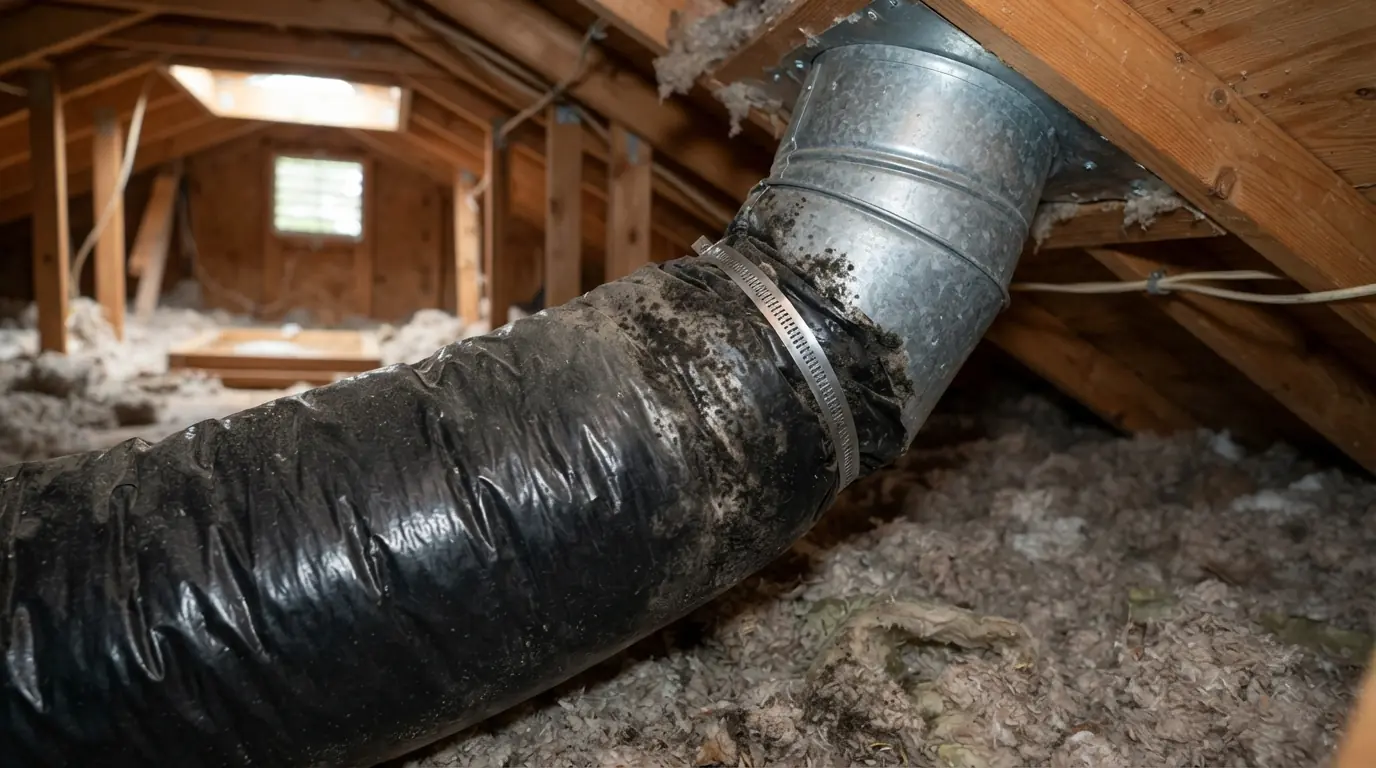
In a humid climate, a duct sweating in a hot attic or a coil that doesn't drain properly can grow mold. Cleaning removes what's there, but the moisture source has to be fixed or it grows back. We look for uninsulated or damaged duct sections, drain pan problems and air leaks that bring humid attic air in. Where growth is extensive on flexible duct, replacing that section is usually better than trying to clean it. You'll get photos of what we found.
Pet dander and heavy dust
Homes with several pets or heavy traffic load ducts and returns faster. Dander and hair collect at the returns and on the blower wheel, which also costs airflow. Cleaning clears the buildup, and a deep media filter at the air handler keeps it from coming back as quickly. We'll check the return grilles and filter slot for gaps that let unfiltered air bypass the filter, a common reason ducts get dirty fast. Sealing those gaps costs little and helps a lot.
Why attic ducts get dirty and damp here
Much of Jacksonville's housing puts the ducts in a vented attic, and during the long muggy season, humid attic air meets cold duct surfaces all afternoon. Where insulation is thin or a joint leaks, condensation forms and dust sticks to it. That's why we pay more attention to duct condition and leaks here than cleaning crews in drier climates do, and why a cleaning visit often turns up a sealing or insulation repair worth doing at the same time.
How the job runs
How a duct cleaning runs
- 1
Inspect
Look at the ducts, returns, coil and blower before starting.
- 2
Set up
Collection unit connected and registers sealed.
- 3
Clean
Every run agitated and vacuumed, returns then supplies.
- 4
Close up
Access ports sealed, registers cleaned and replaced, filter changed.
- 5
Report
Photos and a note on any leaks or damage worth fixing.
Cost factors
What affects the cost of duct cleaning
- Number of vents and returnsMore runs mean more time with the collection unit and tools.
- System layoutAttic trunks, closet air handlers and two systems all change the job.
- Level of debrisPost-renovation dust and pest debris take longer than light dust.
- Coil and blower cleaningCleaning the coil or blower wheel is added when they're dirty.
- Repairs foundLeaks or damaged duct sections are priced separately if you want them fixed.
We price the cleaning after counting registers and seeing the system.
FAQ
Duct cleaning questions
How often should ducts be cleaned?
Most homes don't need it on a schedule. Clean after renovations, water or mold problems, or when debris comes out of the vents.
Will duct cleaning lower my power bill?
Cleaning alone rarely does. Sealing leaks and cleaning a dirty coil or blower usually helps more.
Can you clean flexible duct?
Yes, with care. Heavily contaminated flex duct is usually better replaced.
How long does duct cleaning take?
Most single-system homes take a few hours.
Do you fix mold in the ducts?
We clean it and find the moisture source so it doesn't come back.
Is the house messy afterward?
No. Negative pressure keeps the dust moving into the collection unit, not your rooms.
Should I clean the coil too?
If it's dirty, yes, since dust on the coil blows back into clean ducts.
Related services
Other work on the same system
Smart Thermostat Installation
Wi-Fi and humidity-control thermostats wired correctly for heat pumps and staging.
Learn moreClear the dust at the source
Call any hour to book a cleaning. We'll show you what's in the ducts and what caused it.