Jacksonville, FL
Attic insulation for Jacksonville homes and HVAC systems
Blown-in insulation, radiant barrier and attic air sealing that cut the heat pouring down from a hot attic and ease the load on the air conditioner.
Quick answer
How much attic insulation does a Jacksonville home need?
A Jacksonville home generally benefits from deep attic insulation because the attic above most homes gets far hotter than outdoor air, adding heat to the rooms and the ducts. Topping up blown-in insulation, sealing the attic floor and adding radiant barrier reduce the cooling load, especially in older homes with thin insulation.
Overview
The attic is the biggest heat source in the house
On a summer afternoon the attic above most Jacksonville homes gets far hotter than the air outside. That heat pushes down through the ceiling into the rooms and also soaks into any ductwork running through it. Thin or settled insulation lets more of it through, and the air conditioner pays the price.
Insulation work pairs naturally with HVAC work because it changes the load. Topping up insulation, sealing the gaps in the attic floor where conditioned air leaks up, and adding radiant barrier can make upstairs rooms more comfortable and let a correctly sized system run less. We look at the attic as part of the whole system, not as a separate job.
Cost factors
What affects the cost of insulation work
- Attic sizeLarger attics take more material.
- Existing depthHow much needs adding to reach the target depth.
- Radiant barrierInstalled under the roof deck as an add-on.
- Air sealingSealing gaps before insulating adds labor.
- AccessLow roof pitch and obstructions slow the work.
We measure the attic and price the work in writing.
Options
Attic upgrade options
| Upgrade | What it does | Best for |
|---|---|---|
| Blown-in top-up | Slows heat through the ceiling | Thin or settled insulation |
| Air sealing | Stops air leaks between house and attic | Humid, drafty homes |
| Radiant barrier | Reflects roof heat, lowers attic temperature | Sunny roofs, ducts in attic |
| Duct sealing | Stops cooled air leaking into the attic | Leaky attic ducts |
| All together | The biggest cut in attic heat load | Before or with a system replacement |
Air sealing first, then insulation, gives the best result.
What is included
Every insulation job includes
- Existing insulation depth measured
- Attic floor gaps sealed where accessible
- Hatch weatherstripped
- Soffit vents kept clear with baffles
- Insulation blown to an even depth
- Ducts and fixtures checked before covering
- Depth markers installed
- Before and after photos
What we fix
Blown-in insulation
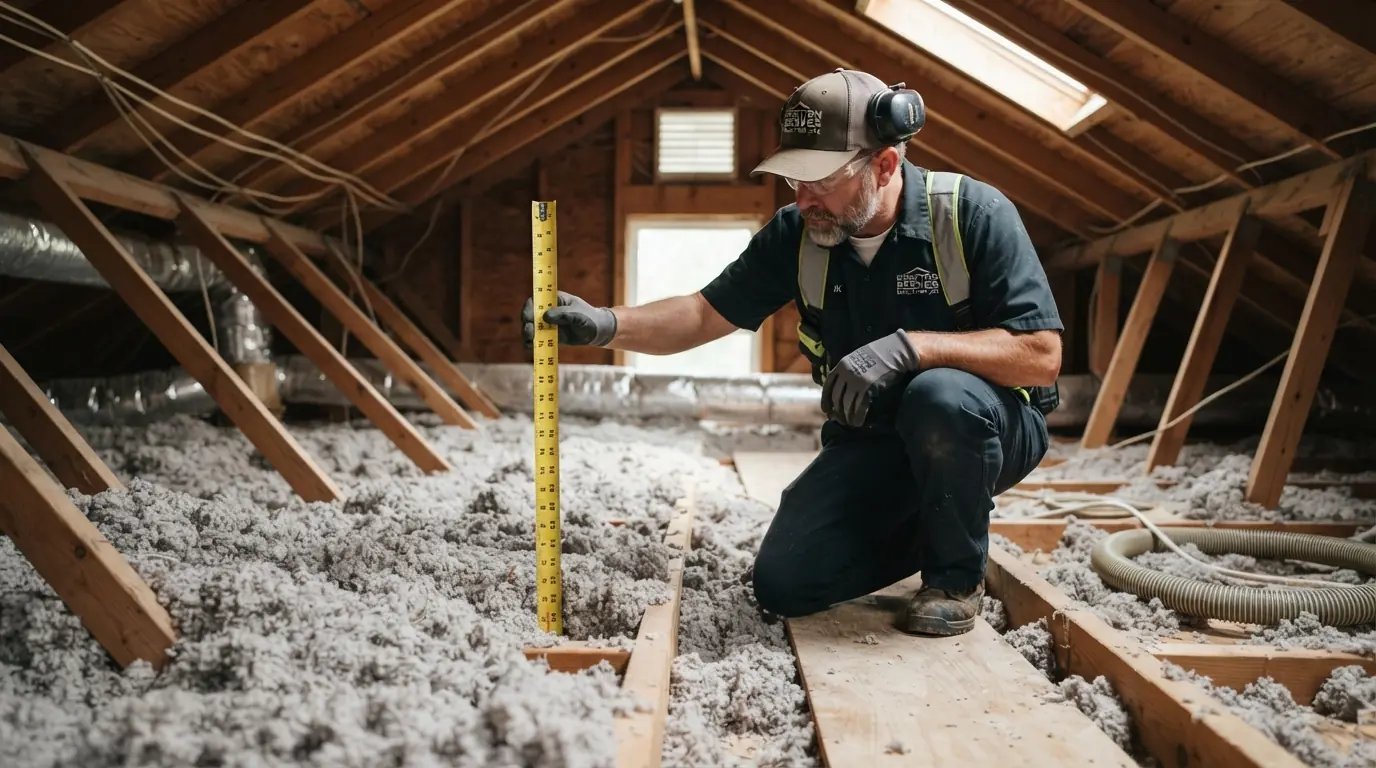
Loose-fill insulation blown over the attic floor fills around joists, wiring and ducts better than batts can. Over years it settles and gets disturbed by work in the attic, leaving thin spots. We measure the existing depth, add enough to bring it to a sensible level throughout, keep it back from soffit vents so the attic still ventilates, and mark the depth so it can be checked later. It's usually a single day's work with little disruption downstairs. Before and after photos show the depth you ended up with.
Radiant barrier
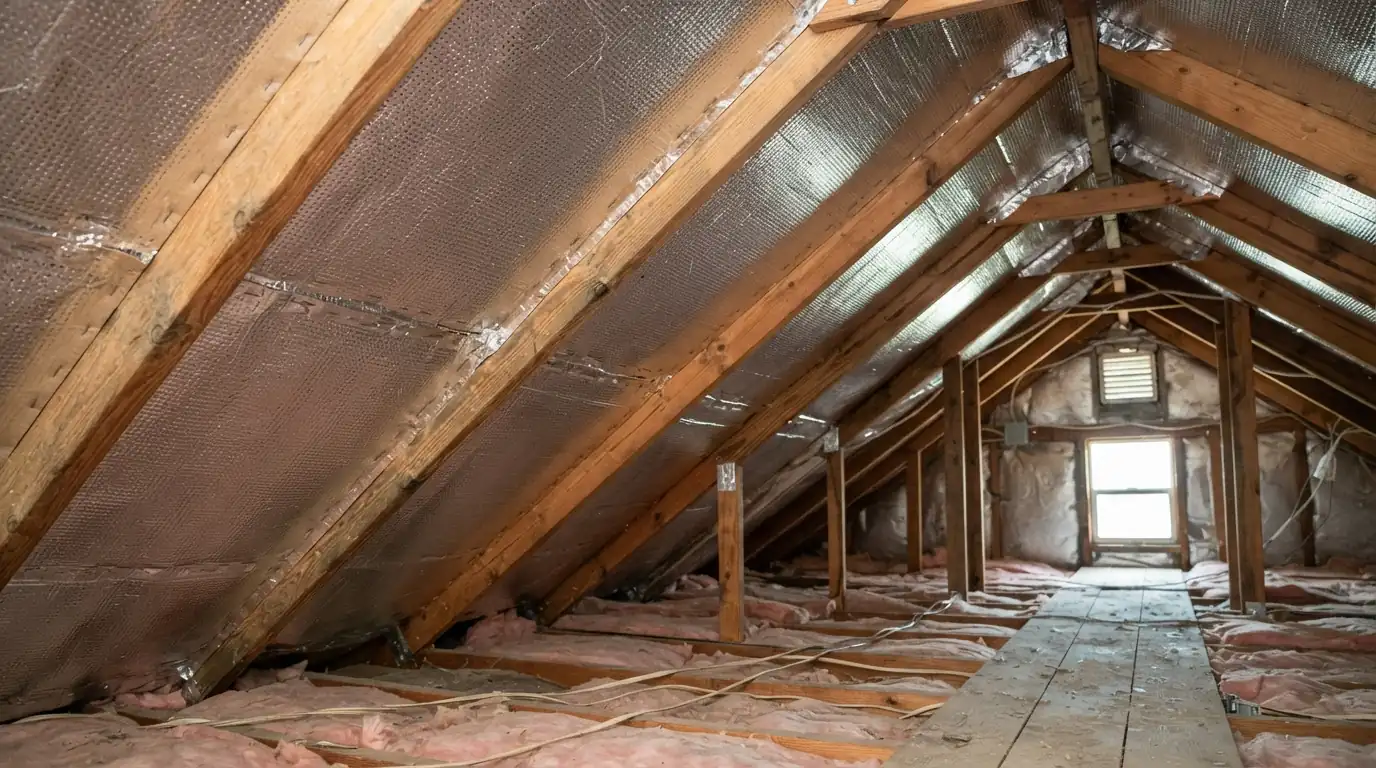
A radiant barrier is a reflective foil installed under the roof deck that reflects radiant heat from the hot shingles back upward, lowering attic temperature. In a sunny, hot climate that can make a noticeable difference to the heat reaching the insulation and ducts. It works alongside insulation rather than replacing it, and it has to be installed with the reflective side facing an air space to do its job properly. We'll tell you honestly whether your roof and attic layout suit it before recommending it.
Air sealing the attic floor
Gaps around light fixtures, plumbing stacks, wiring holes, the attic hatch and the tops of interior walls let conditioned air leak up into the attic and hot, humid attic air leak down. Sealing those gaps before adding insulation keeps the insulation working and reduces humidity inside. We seal the accessible gaps with foam and sealant, weatherstrip the hatch, and then add insulation over the top. It's the least visible part of the job and often the part that makes the biggest difference to comfort.
Insulation in older south side homes
Through the 1970s and 1980s, subdivisions spread south through Mandarin and across Julington Creek, built to the energy codes of their time. Many of those attics still have original insulation that has settled over forty-plus years, and the ductwork runs through the same hot space. When we replace a system in those homes, we often recommend checking and topping up the insulation at the same time, since it changes the load the new system has to carry.
How the job runs
How an insulation job runs
- 1
Inspect
Depth, gaps, ventilation and ducts checked.
- 2
Written price
Scope and materials priced.
- 3
Air seal
Accessible gaps sealed and the hatch weatherstripped.
- 4
Insulate
Blown-in insulation added, radiant barrier if chosen.
- 5
Document
Depth markers and photos left with you.
FAQ
Attic insulation questions
Does attic insulation help my AC?
Yes, it reduces the heat coming through the ceiling and around the ducts.
Is radiant barrier worth it in Florida?
In sunny, hot climates it can lower attic temperatures noticeably.
Should I air seal before insulating?
Yes. Sealing first keeps the insulation effective.
How long does attic insulation take?
Most attics are done in a day.
Will it make upstairs cooler?
Usually, especially in homes with thin insulation.
Can you do it with a system replacement?
Yes, and it can change the size of system you need.
Does insulation help with humidity?
Air sealing the attic floor keeps humid attic air out of the house, which helps.
Related services
Other work on the same system
Duct Cleaning
Dust, debris and growth cleared from supply and return runs after renovations or water events.
Learn moreSmart Thermostat Installation
Wi-Fi and humidity-control thermostats wired correctly for heat pumps and staging.
Learn more