Jacksonville, FL guide
Attic duct leaks in Jacksonville homes: what they cost and how to fix them
Why ducts in a hot attic matter so much here, the signs of leakage, and the difference between a real repair and a roll of tape.
By Glenn Milburn, HVAC Guides Editor Updated September 2026
Quick answer
Do attic duct leaks matter in Jacksonville, FL?
Attic duct leaks matter a great deal in Jacksonville because most homes run ducts through a vented attic that gets very hot, so supply leaks dump cooled air there and return leaks pull hot, humid attic air into the system. Sealing with mastic and testing before and after fixes it.
Why the attic makes it worse here
About 57 percent of Jacksonville's housing was built in 2000 or later, and most of those homes put the air handler and nearly all the ductwork in a vented attic. On a summer afternoon that attic is far hotter than outside. Every leak on the supply side sends air you've paid to cool into that heat.
Return-side leaks are arguably worse. A leaking return pulls hot, humid attic air into the system, adding both heat and moisture the AC then has to remove. In a city where humidity is already the main comfort problem, that's a double hit.
Where ducts leak
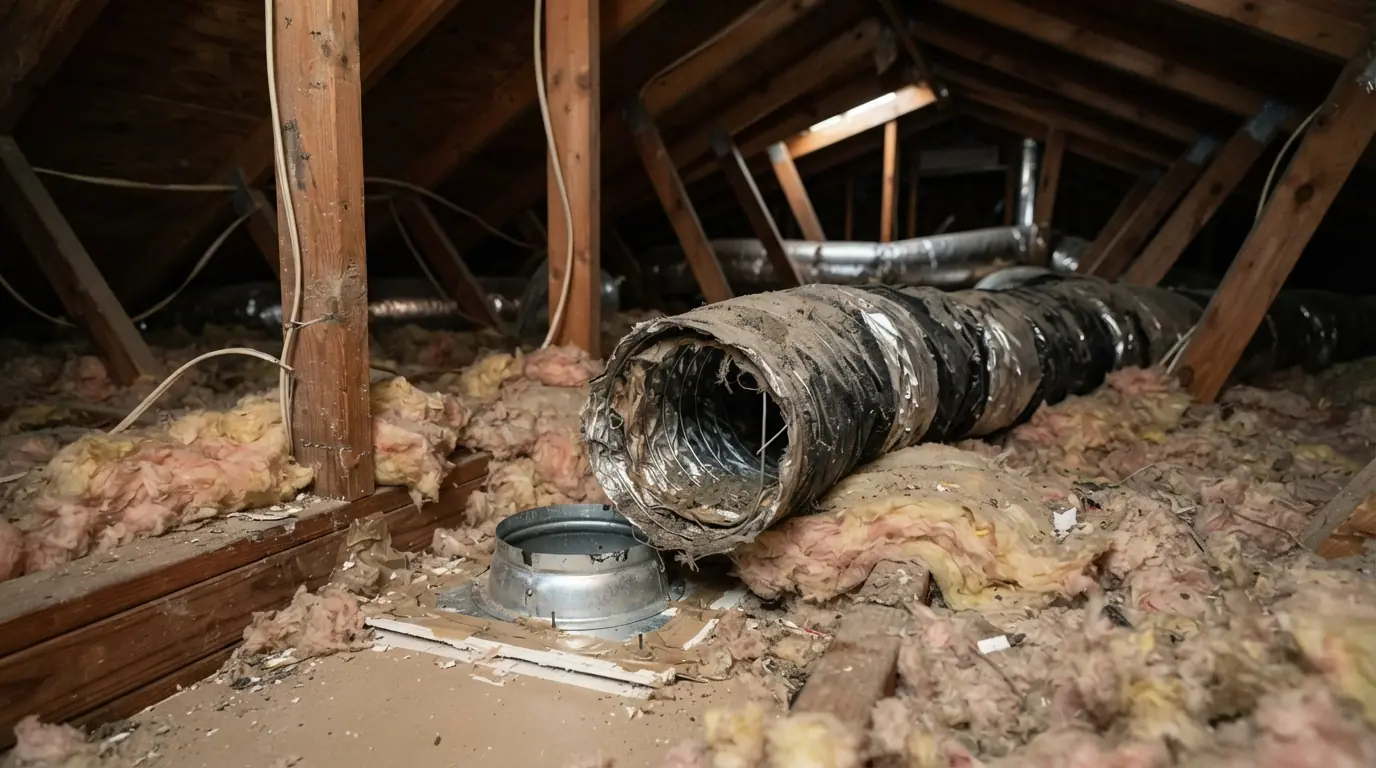
The usual spots are the connection between the air handler and the supply plenum, the return box, trunk seams, the takeoffs where branch ducts leave the trunk, and the boots where ducts meet the ceiling registers. Flexible duct can also pull off its collar entirely, which turns a leak into an open pipe blowing into the attic.
Crushed or kinked flex duct doesn't leak, but it chokes airflow to the rooms it serves, with similar results.

Signs your ducts are leaking
Rooms at the far end of the runs that never get as cool as the rest. A system that runs long but struggles on hot afternoons. More dust than usual, especially near return grilles. Higher humidity indoors. A power bill that's crept up without a change in how you use the house.
None of these proves a leak on its own, but together they point to the ducts. A duct leakage test confirms it with a number.

Think your ducts are leaking?
Call any hour. We'll test first and only recommend sealing if the numbers say it's worth it.
How leakage is measured
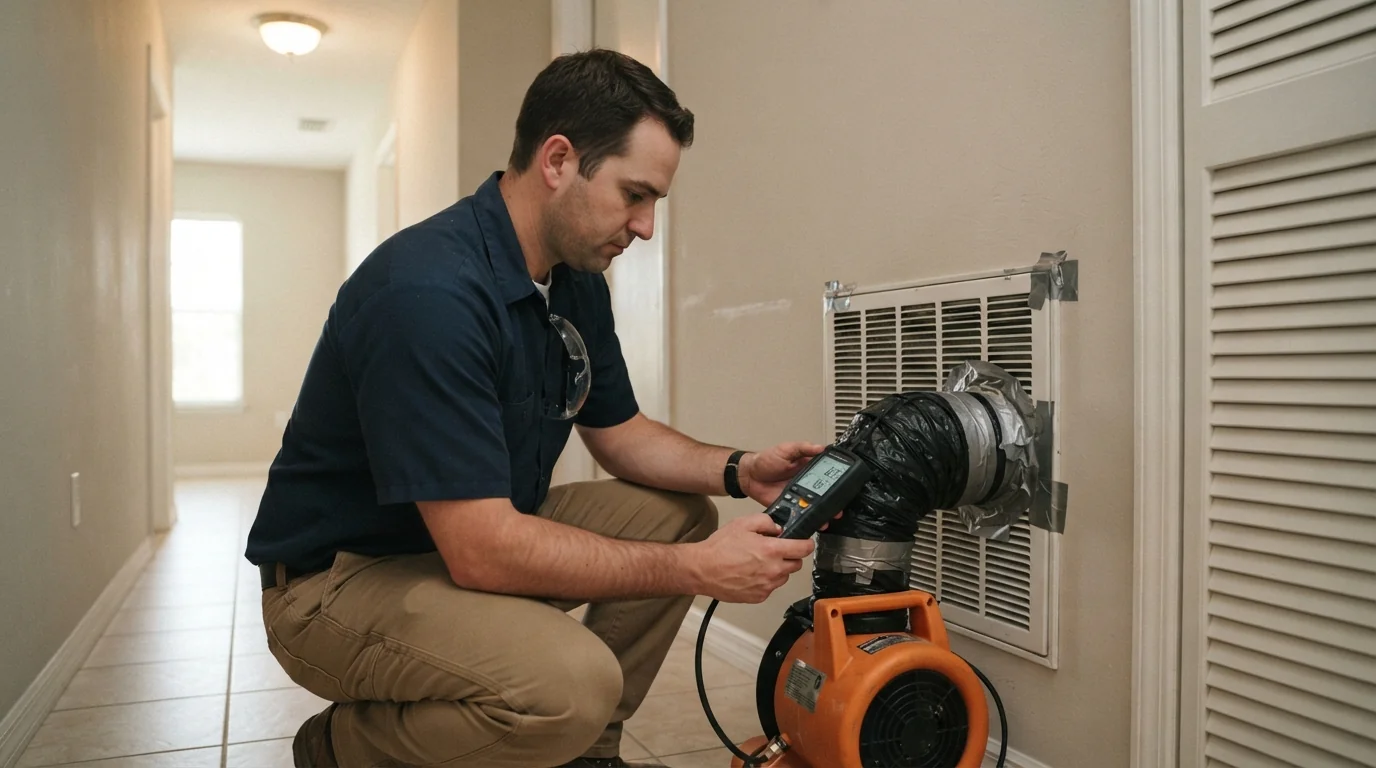
A duct leakage test seals the registers and pressurizes the duct system with a calibrated fan, measuring how much air escapes. Done before sealing, it tells you whether sealing is worth it. Done after, it shows the result in numbers rather than impressions.
It also finds problems a visual check misses, like a return leaking inside a wall cavity or a boot disconnected under the insulation.
How leaks get fixed properly
Mastic, a thick paste brushed over joints, often with fiberglass mesh across wider gaps, is the standard. It stays flexible through attic heat cycles and doesn't dry out and peel the way cloth duct tape does. Disconnected flex duct is reattached with a proper strap before sealing. For leaks that can't be reached, aerosol sealing from inside the ducts can close small and medium gaps.
Cloth duct tape, despite the name, isn't a lasting duct repair in a Florida attic. It dries, loses adhesion and falls off, sometimes within a season.
What sealing changes day to day
After sealing, homeowners most often notice more even temperatures between rooms and a system that reaches the setpoint more easily on hot afternoons. Less dust around return grilles is another common change, since a sealed return stops pulling attic dust into the system.
Humidity usually improves too, especially when return leaks were the problem. The re-test number shows exactly how much leakage was removed, so the improvement isn't a matter of opinion.
Seal or replace?
Sealing makes sense when the ducts are in reasonable shape and the leaks are at joints. When flex duct is brittle, torn, badly crushed, or growing mold, replacing those sections, or the whole system, is often the better investment. The leakage test and a look at the attic tell you which.
Either way, pairing the repair with a check of attic insulation over the ducts helps, since poorly insulated ducts can sweat and drip in humid weather.
FAQ
Questions readers ask
How much air do leaky ducts lose?
It varies widely; a leakage test measures it for your home.
Can I seal my ducts with duct tape?
Not for a lasting repair. Cloth duct tape fails in attic heat; mastic lasts.
Do duct leaks make the house humid?
Return leaks can, by pulling humid attic air into the system.
How do I know if my ducts leak?
Warm rooms, dust, humidity and high bills are clues. A test confirms it.
Is duct sealing messy?
Most of the work happens in the attic and at the air handler.
Should I replace instead of seal?
If ducts are torn, crushed or moldy, replacement often makes more sense.
How much time does duct sealing usually need?
Most homes take about a day including testing.
Keep reading
Related services and guides
Why the house feels humid with the AC on
The reason a system can hit the setpoint and still leave the air damp, how to tell if it's happening, and the fixes in.
Learn moreHow an AC should be sized
Why the rule of thumb fails in a humid climate, what a Manual J load calculation actually measures, and the questions.
Learn moreQuestions to ask an HVAC contractor
Ten questions that reveal how a contractor sizes, installs and stands behind a system, and what good answers sound.
Learn more